
From Matilde di Canossa to date
A thousand years of history
Some places accumulate history without becoming defined by it. Roncolo is one of those places. The hills between Parma and Reggio Emilia have been farmed, contested, and inhabited since the age of Matilde di Canossa in the eleventh century. The villa that anchors the estate dates to 1670. The winemaking operation that gave the estate its name, Venturini Baldini, has been producing organic wines and balsamic vinegars since 1976. And yet none of this weight presses down on the experience of being here. Roncolo wears its history lightly, the way places do when they have never had to perform it.
The decision to welcome guests grew naturally from a longer story. In 2015, the Prestia family arrived at a Villa Manodori that had fallen into disrepair, with a clear intention: not to transform the estate, but to restore it. To allow it to be lived in again, without altering its soul. The rooms, the restaurant, the experiences — all of it followed from that founding conviction. Roncolo is not a hotel that has been given an estate as a backdrop. It is an estate that decided, at the right moment, to share what it had always been.
What follows is that story, from its medieval origins to the present day.
MATILDE DI CANOSSA
11th & 12th century
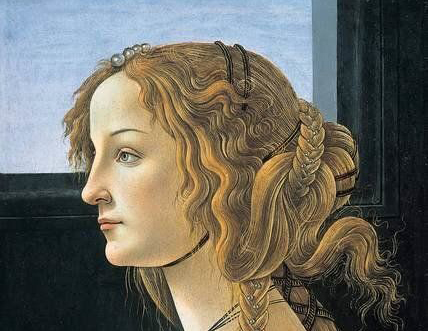
What these hills have seen over the centuries we can only imagine, but we know with certainty the influence of one extraordinary woman. Matilde di Canossa — Matilda of Tuscany — was one of the most powerful governing figures of the Italian Middle Ages, ruler of a vast territory stretching from Lombardy across Emilia to Tuscany, with Canossa at its centre. The village of Roncolo, home to the Tenuta di Roncolo, is part of the town of Quattro Castella — named for four medieval castles that formed part of Matilda’s defensive system. The landscape here was shaped, in part, by her hand.
COLOMBARA
15th century
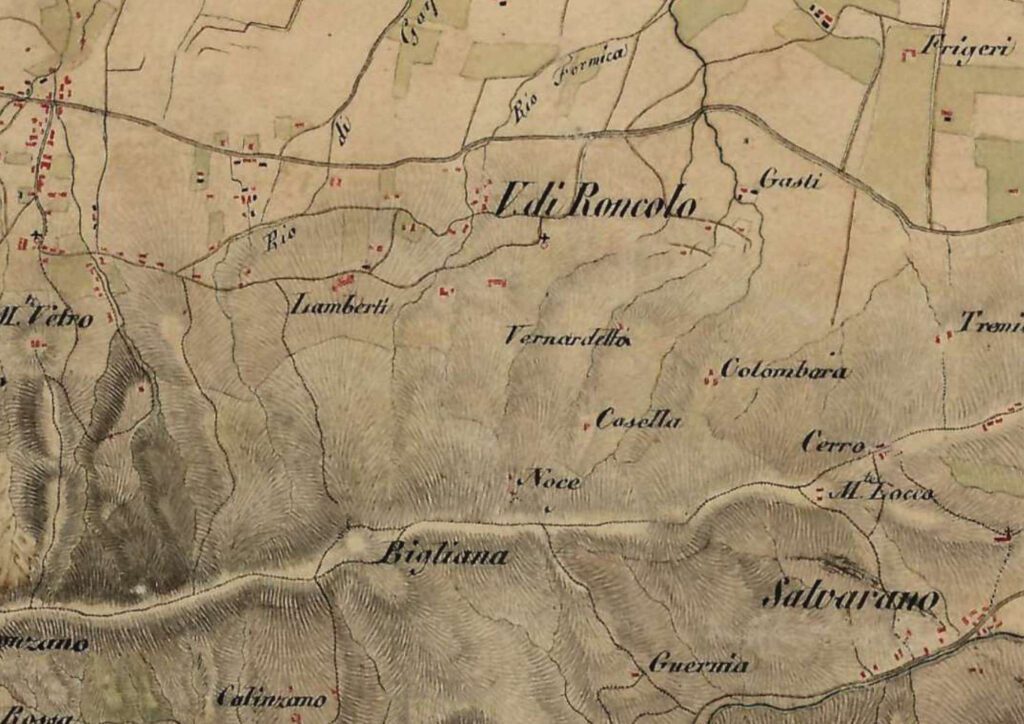
The origins of what would become Villa Manodori are said to date to the early fifteenth century. Until the early nineteenth century, the site was known as La Colombara — a name that may derive from the presence of an ancient dovecote tower on the first hill of the estate, overlooking the Via Emilia. The land has been inhabited and farmed for as long as records exist.
VILLA MANODORI
17TH-19TH century
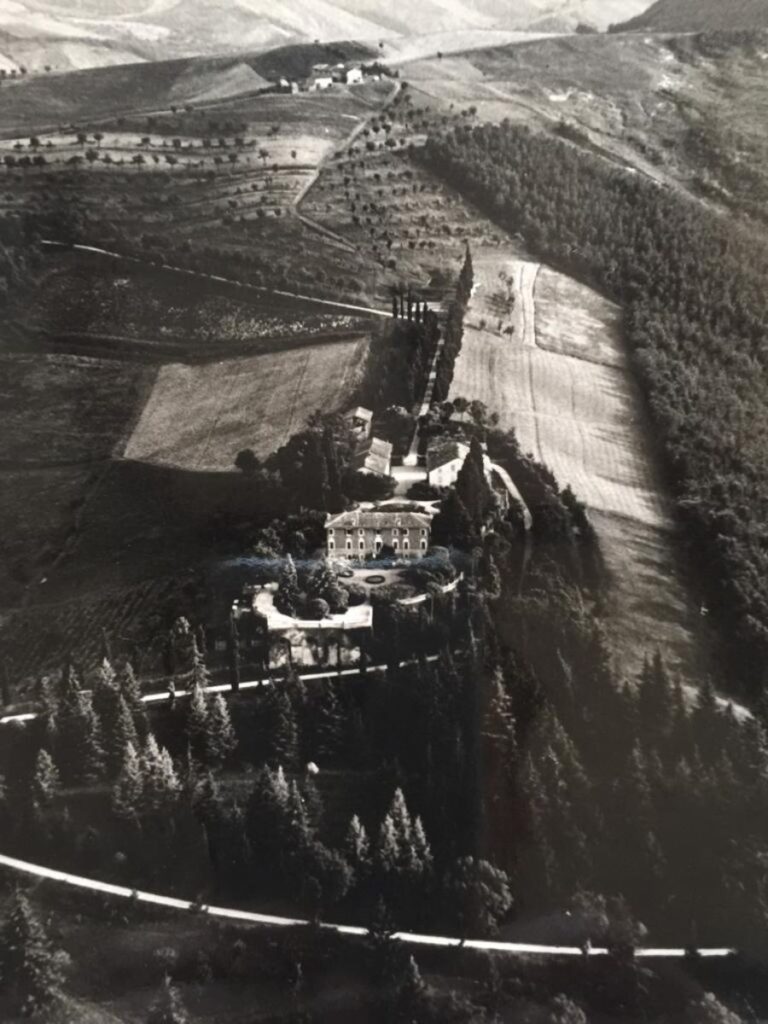
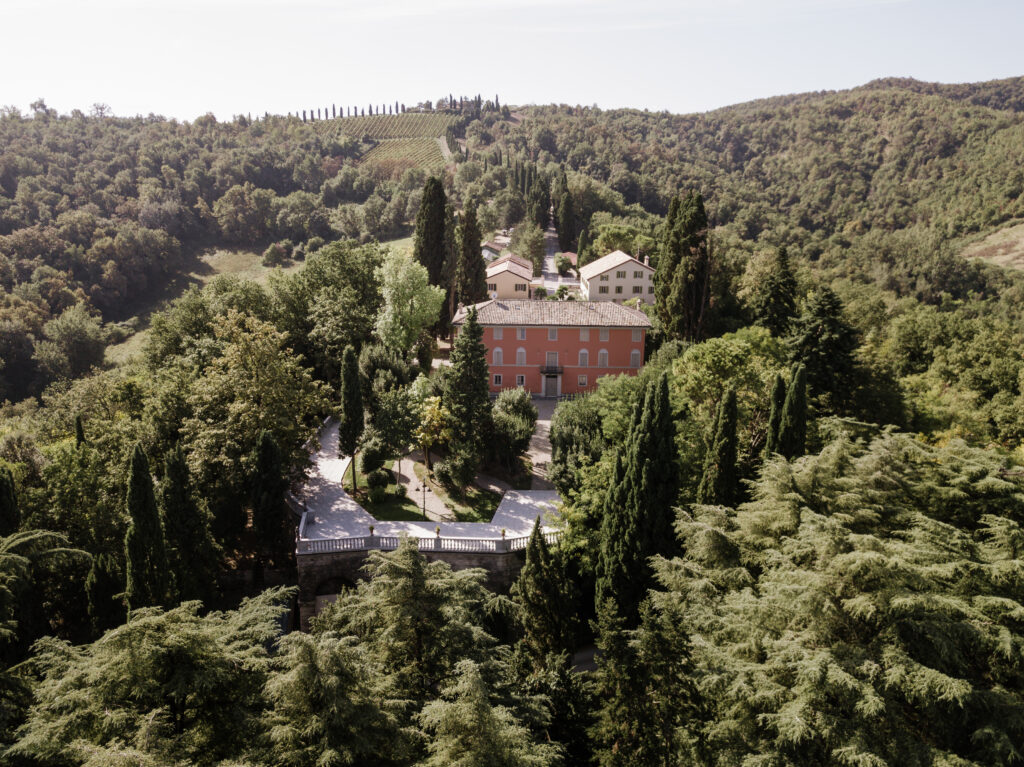
The villa that stands today dates to 1670, and owes its present form to a nineteenth-century renovation. It passed into the Manodori family estate as a dowry property following the marriage of Giovanni Manodori to Countess Enrica Ancini, a member of one of Emilia’s most distinguished families — her ancestral city palace now houses the offices of the Mayor of Reggio Emilia. The Manodori Galliani family established Villa Manodori as their permanent summer residence in 1922, following damage to their family villa in Valestra by an earthquake. The frescos and hand-painted wallpapers that survive to this day date from this period.
VENTURINI BALDINI
1976
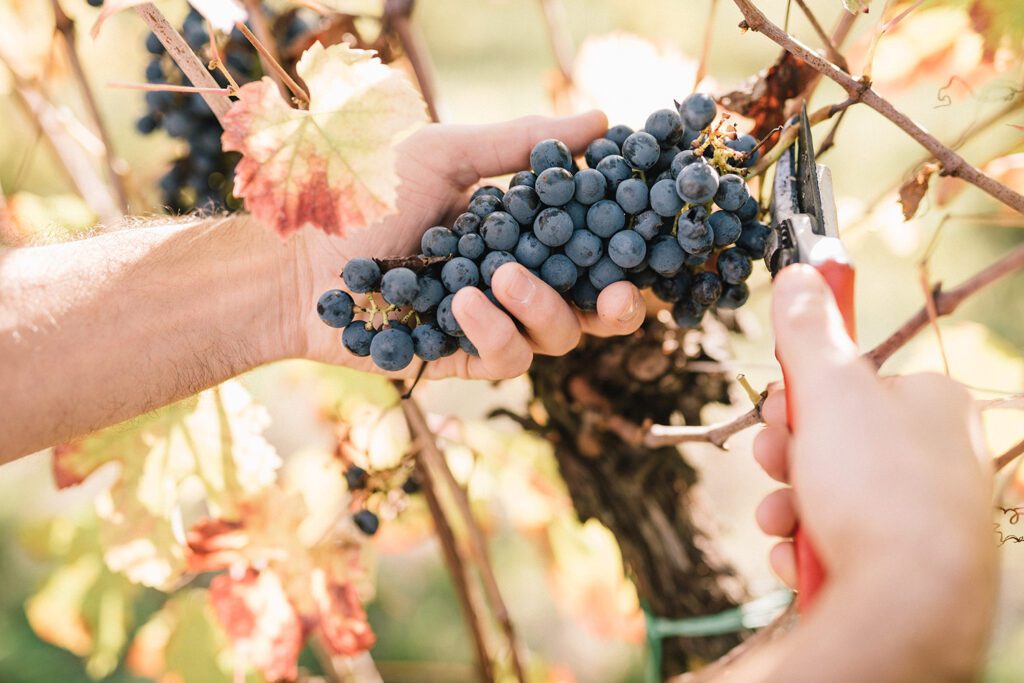
Beatrice Baldini and Carlo Venturini acquired the estate from Marchese Giampiero Manodori Galliani and moved with their young family to live in Villa Manodori — the beginning of an unbroken chain of family stewardship that continues to this day. The estate had been farmed by sharecroppers and tenant farmers across a range of traditional agricultural activities. The Venturini Baldini family reorganised the roadways and fields, restored the historic buildings, founded the agricultural company Venturini Baldini, and began the production of organic wines, balsamic vinegars, and other farm produce under the guidance of renowned winemaker Carlo Ferrini.
ORGANIC CERTIFICATION
1994 / 2025
With sustainability at the heart of their strategy from the very beginning, Venturini Baldini had always farmed the estate organically. In 1994 — shortly after Italian legislation on organic production certification came into effect, and a full generation before organic farming became a mainstream aspiration — the winery obtained its official organic certification. The decision was not a response to market trends. It was the formalisation of a conviction already thirty years old. The estate has held that certification, without interruption, ever since.
PRESTIA FAMILY
2015
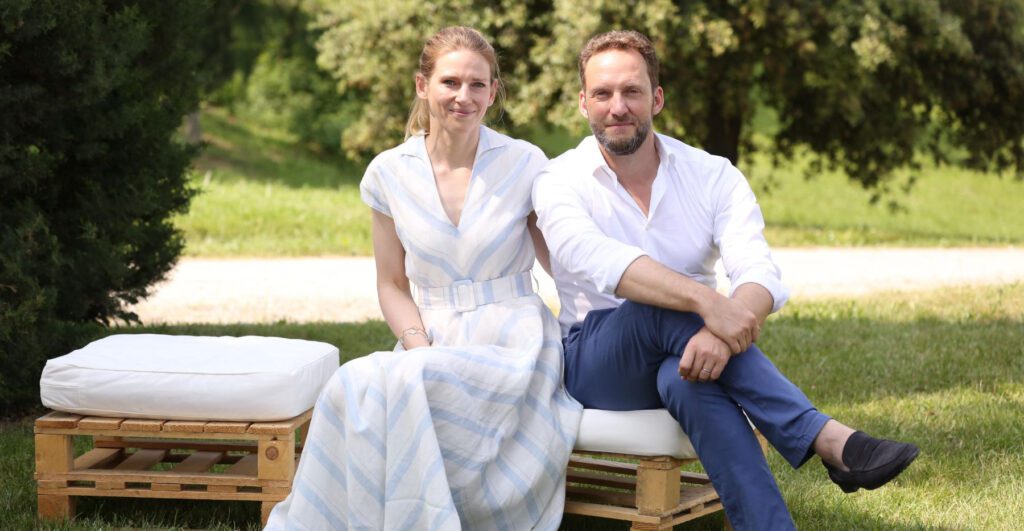
Following years of decline in the early twenty-first century, Villa Manodori and its surrounding buildings had fallen into disrepair, the estate overgrown and rewilded. In 2015, the Prestia family arrived — bringing with them the energy, vision, and genuine passion required to restore not just the buildings, but the life of the place. Working with renowned winemaker Carlo Ferrini to relaunch the wines, and guided by a deep respect for what the estate had always been, the family set a clear direction: to create a hospitality offering of the highest level, rooted in the agricultural identity of the estate rather than imposed upon it. Roncolo would become the first Wine & Balsamic Relais in Emilia.
Le dimore
2020
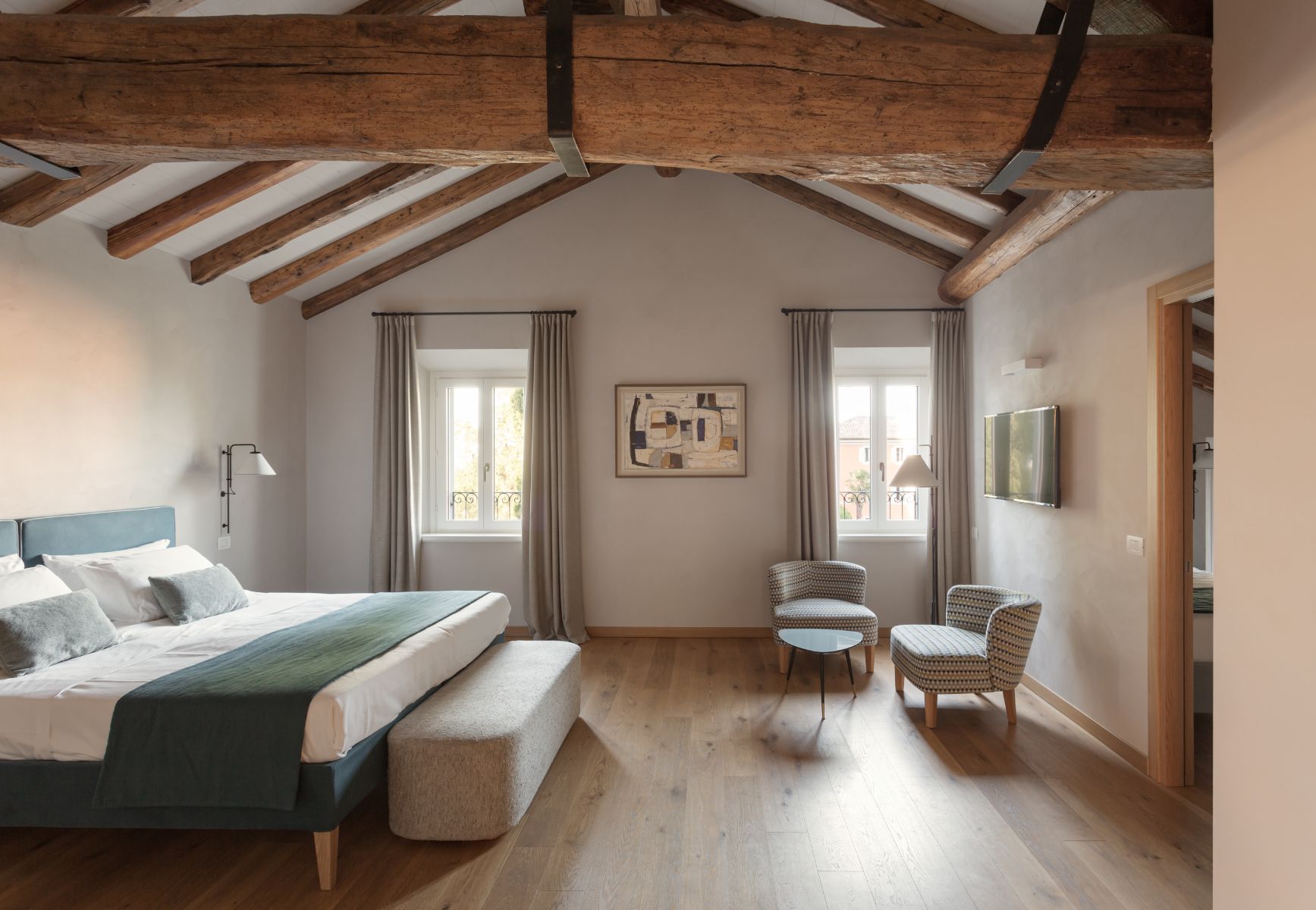
Following the careful renovation of the buildings surrounding Villa Manodori — Dimora Ancini and Dimora Acetaia — Roncolo welcomed its first guests in the summer of 2020. While the restoration of Villa Manodori itself, with its original frescos, was still ongoing, the seventeenth-century outbuildings had been beautifully renovated, their historic features preserved and their interiors furnished with the understated luxury of natural materials and warm, considered palettes.
ristorante LIMONAIA
2021
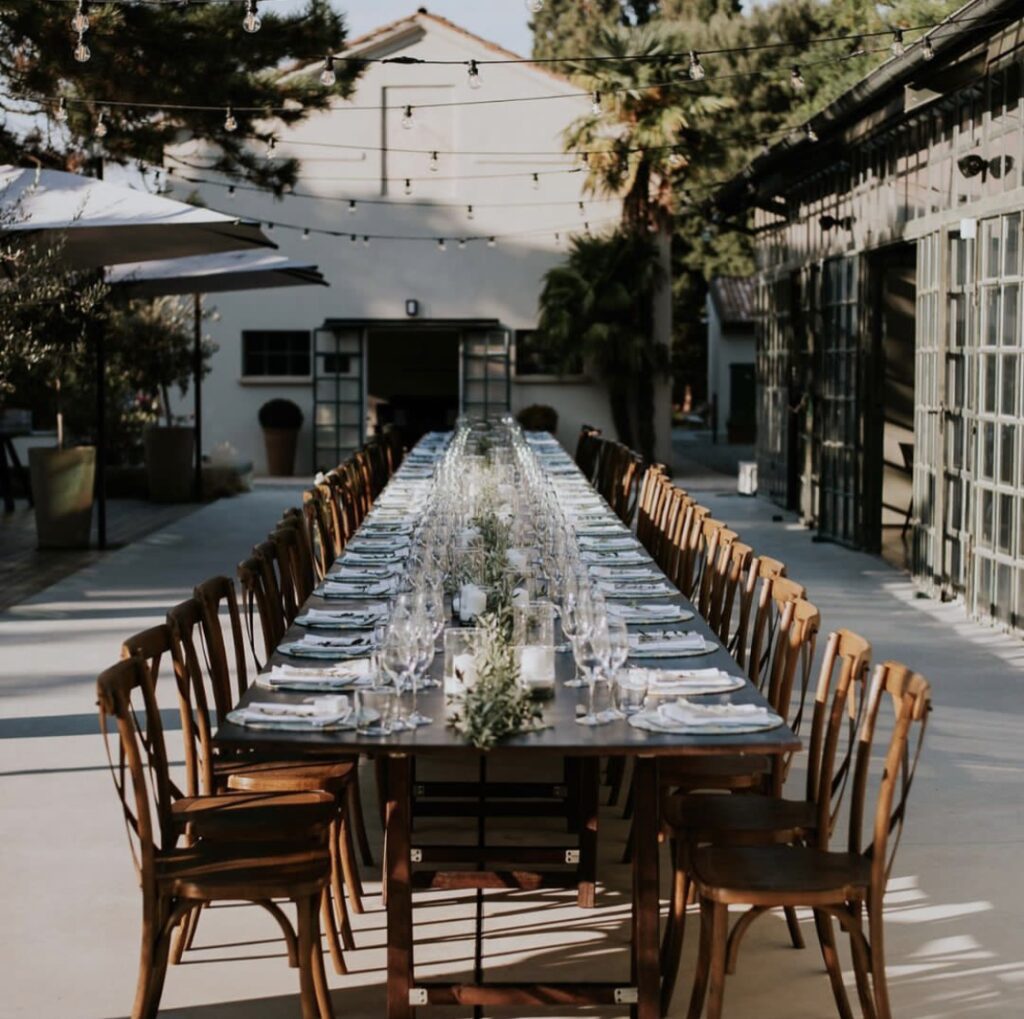
Ristorante Limonaia opened in the estate’s converted historic greenhouse, its terrace overlooking the green of the vineyards and gardens. The restaurant offers a farm-to-table fine-dining experience grounded in the culinary heritage of Emilia-Romagna — from the traditional dishes of the Food Valley to inventive contemporary interpretations of seasonal produce drawn directly from the land. The menu changes with the harvest, not with the season on the calendar.

RELAIS RONCOLO 1888
2022
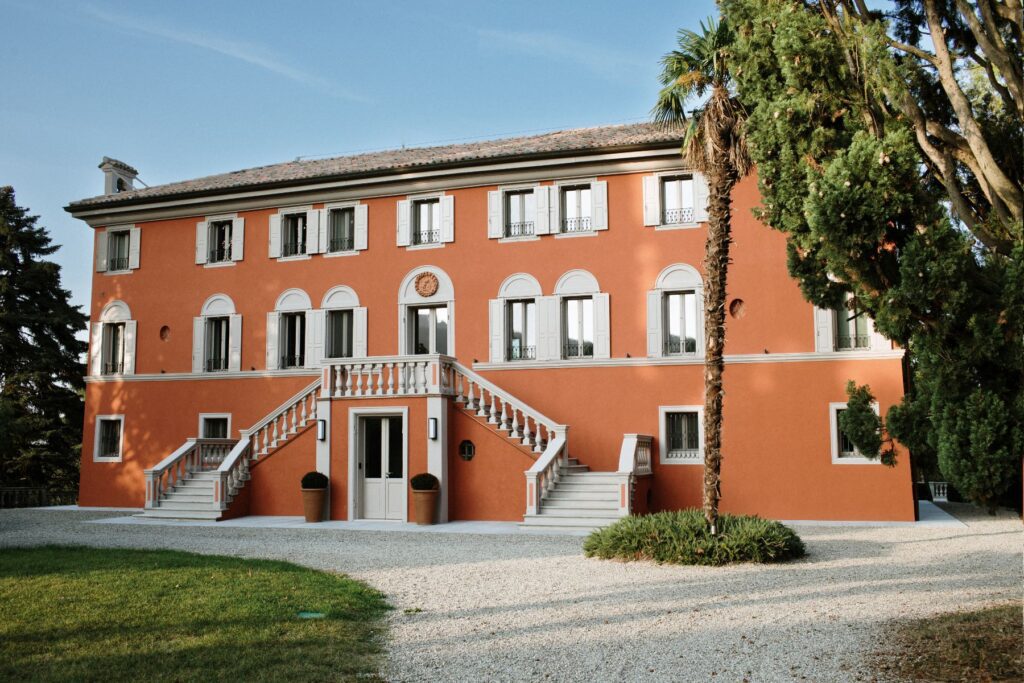
After years of painstaking restoration — carried out with the same care for heritage that has guided every decision at Roncolo — Villa Manodori with its magnificent frescos and hand-painted wallpapers returned to take its place as the historic heart of the estate. The Relais now spans 17 rooms and suites distributed across the hamlet: six in Villa Manodori itself, and the remainder in the beautifully restored outbuildings of Le Dimore. Each room is unique. Each carries the particular character of its place in the estate. Roncolo was complete.
B CORP CERTIFICATION
2025
In 2025, Tenuta di Roncolo became a certified B Corporation — one of the very few hospitality properties in Italy to meet the rigorous social and environmental standards that B Corp certification requires. The estate is almost entirely energy self-sufficient, powered by solar panels. It is plastic-free. It relies on natural ventilation. These are not features added in response to a certification process. They are the expression of a philosophy that has been in place, quietly and without announcement, since 1994.
11th & 12th century
MATILDE DI CANOSSA
What these hills have seen over the centuries we can only imagine, but we know with certainty the influence of one extraordinary woman. Matilde di Canossa — Matilda of Tuscany — was one of the most powerful governing figures of the Italian Middle Ages, ruler of a vast territory stretching from Lombardy across Emilia to Tuscany, with Canossa at its centre. The village of Roncolo, home to the Tenuta di Roncolo, is part of the town of Quattro Castella — named for four medieval castles that formed part of Matilda’s defensive system. The landscape here was shaped, in part, by her hand.
15th Century
COLOMBARA
The origins of what would become Villa Manodori are said to date to the early fifteenth century. Until the early nineteenth century, the site was known as La Colombara — a name that may derive from the presence of an ancient dovecote tower on the first hill of the estate, overlooking the Via Emilia. The land has been inhabited and farmed for as long as records exist.
17TH - 19th century
VILLA MANODORI
The villa that stands today dates to 1670, and owes its present form to a nineteenth-century renovation. It passed into the Manodori family estate as a dowry property following the marriage of Giovanni Manodori to Countess Enrica Ancini, a member of one of Emilia’s most distinguished families — her ancestral city palace now houses the offices of the Mayor of Reggio Emilia. The Manodori Galliani family established Villa Manodori as their permanent summer residence in 1922, following damage to their family villa in Valestra by an earthquake. The frescos and hand-painted wallpapers that survive to this day date from this period.
1976
VENTURINI-BALDINI
Beatrice Baldini and Carlo Venturini acquired the estate from Marchese Giampiero Manodori Galliani and moved with their young family to live in Villa Manodori — the beginning of an unbroken chain of family stewardship that continues to this day. The estate had been farmed by sharecroppers and tenant farmers across a range of traditional agricultural activities. The Venturini Baldini family reorganised the roadways and fields, restored the historic buildings, founded the agricultural company Venturini Baldini, and began the production of organic wines, balsamic vinegars, and other farm produce under the guidance of renowned winemaker Carlo Ferrini.
1994
ORGANIC CERTIFICATION
With sustainability at the heart of their strategy from the very beginning, Venturini Baldini had always farmed the estate organically. In 1994 — shortly after Italian legislation on organic production certification came into effect, and a full generation before organic farming became a mainstream aspiration — the winery obtained its official organic certification. The decision was not a response to market trends. It was the formalisation of a conviction already thirty years old. The estate has held that certification, without interruption, ever since.
2015
PRESTIA FAMILY
Following years of decline in the early twenty-first century, Villa Manodori and its surrounding buildings had fallen into disrepair, the estate overgrown and rewilded. In 2015, the Prestia family arrived — bringing with them the energy, vision, and genuine passion required to restore not just the buildings, but the life of the place. Working with renowned winemaker Carlo Ferrini to relaunch the wines, and guided by a deep respect for what the estate had always been, the family set a clear direction: to create a hospitality offering of the highest level, rooted in the agricultural identity of the estate rather than imposed upon it. Roncolo would become the first Wine & Balsamic Relais in Emilia.
2020
le dimore
Following the careful renovation of the buildings surrounding Villa Manodori — Dimora Ancini and Dimora Acetaia — Roncolo welcomed its first guests in the summer of 2020. While the restoration of Villa Manodori itself, with its original frescos, was still ongoing, the seventeenth-century outbuildings had been beautifully renovated, their historic features preserved and their interiors furnished with the understated luxury of natural materials and warm, considered palettes.
2021

RISTORANTE LIMONAIA
Ristorante Limonaia opened in the estate’s converted historic greenhouse, its terrace overlooking the green of the vineyards and gardens. The restaurant offers a farm-to-table fine-dining experience grounded in the culinary heritage of Emilia-Romagna — from the traditional dishes of the Food Valley to inventive contemporary interpretations of seasonal produce drawn directly from the land. The menu changes with the harvest, not with the season on the calendar.
2022
relais roncolo 1888
After years of painstaking restoration — carried out with the same care for heritage that has guided every decision at Roncolo — Villa Manodori with its magnificent frescos and hand-painted wallpapers returned to take its place as the historic heart of the estate. The Relais now spans 17 rooms and suites distributed across the hamlet: six in Villa Manodori itself, and the remainder in the beautifully restored outbuildings of Le Dimore. Each room is unique. Each carries the particular character of its place in the estate. Roncolo was complete.
2025
B CORP CERTIFICATION
In 2025, Tenuta di Roncolo became a certified B Corporation — one of the very few hospitality properties in Italy to meet the rigorous social and environmental standards that B Corp certification requires. The estate is almost entirely energy self-sufficient, powered by solar panels. It is plastic-free. It relies on natural ventilation. These are not features added in response to a certification process. They are the expression of a philosophy that has been in place, quietly and without announcement, since 1994.
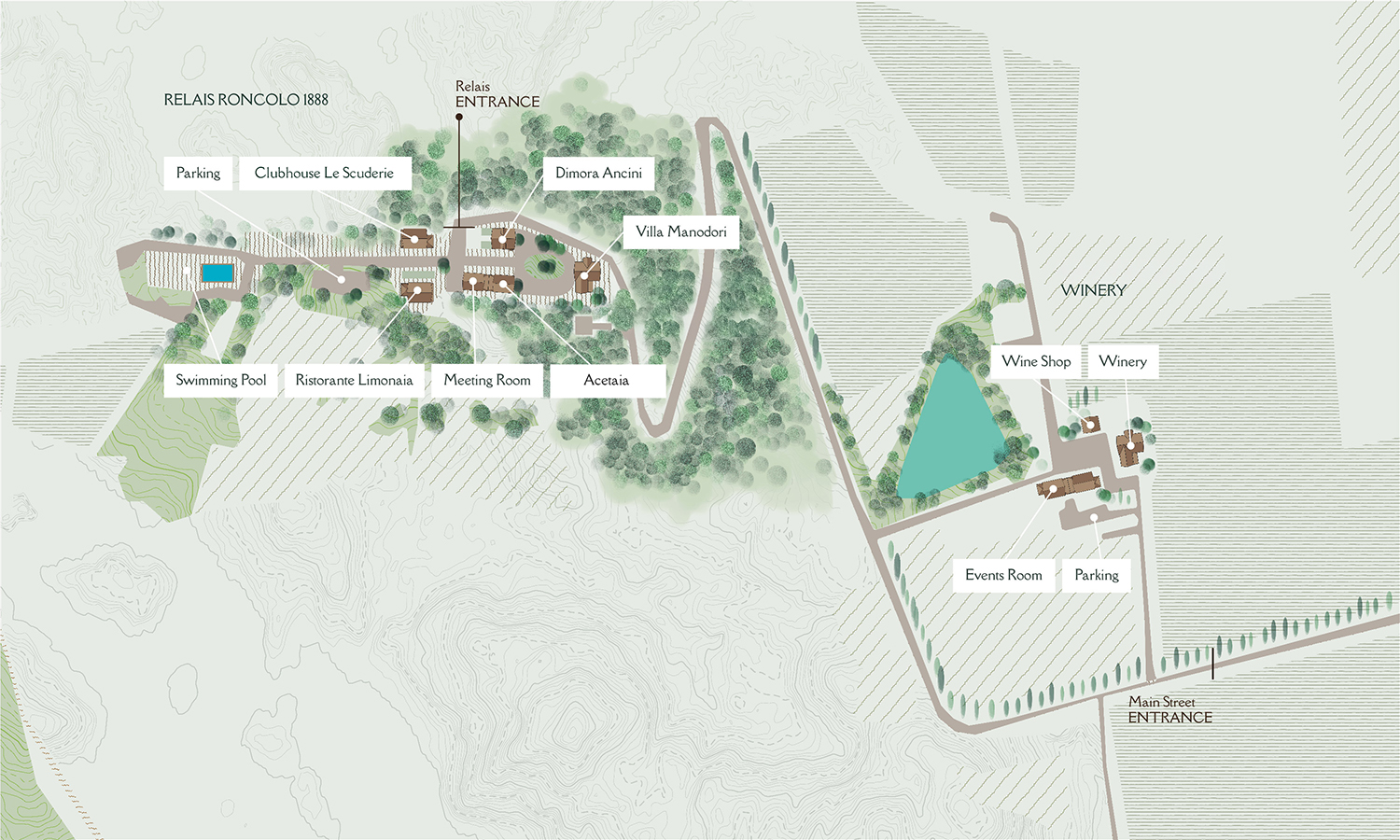
The estate map
Emilia: Italy's Hidden Gem
The Land of the Slow Mix – an authentic, unexpected, and unexplored region.
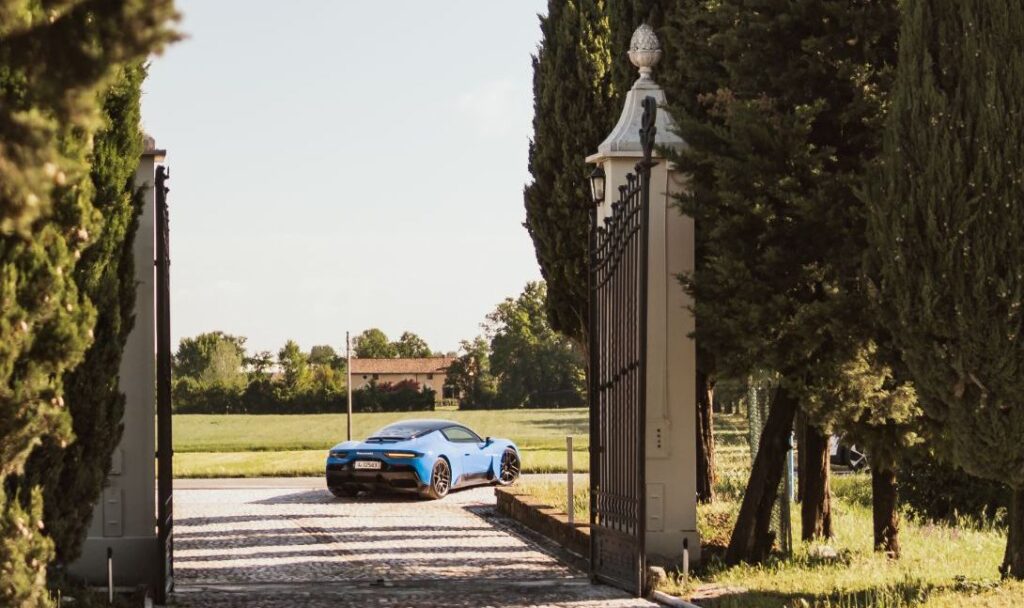
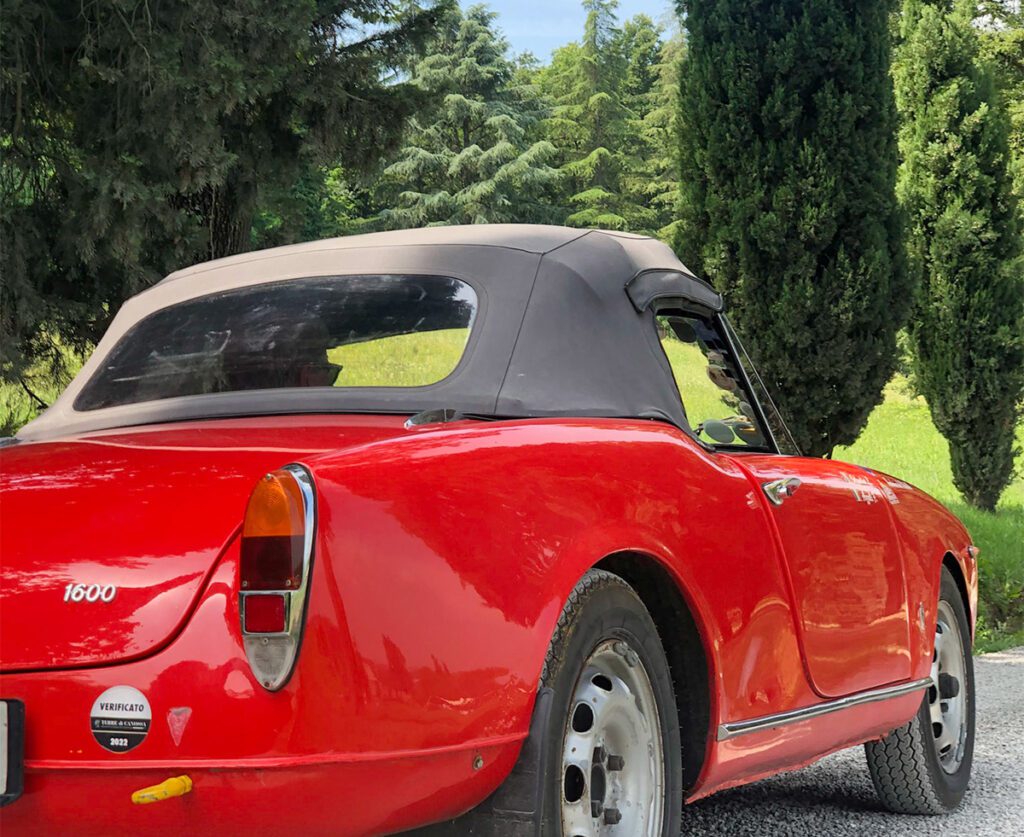
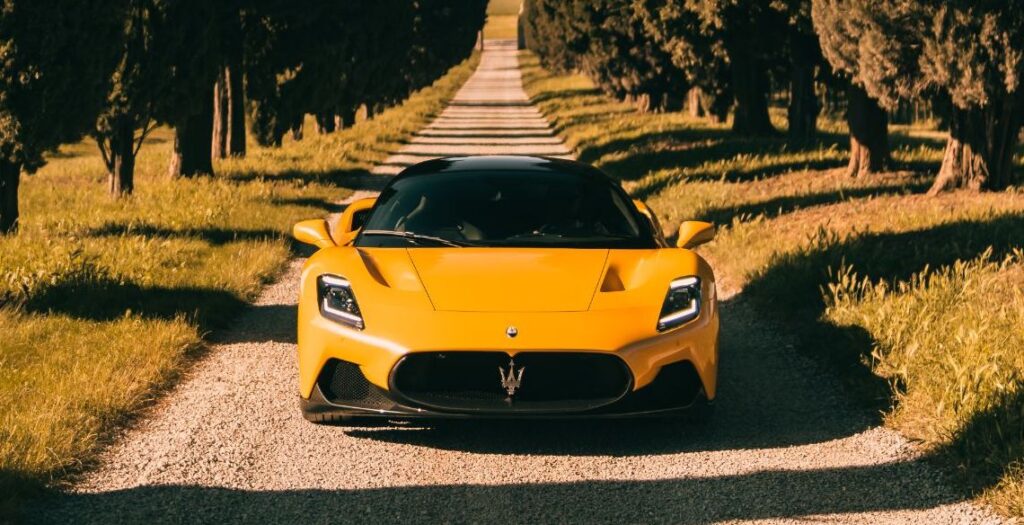
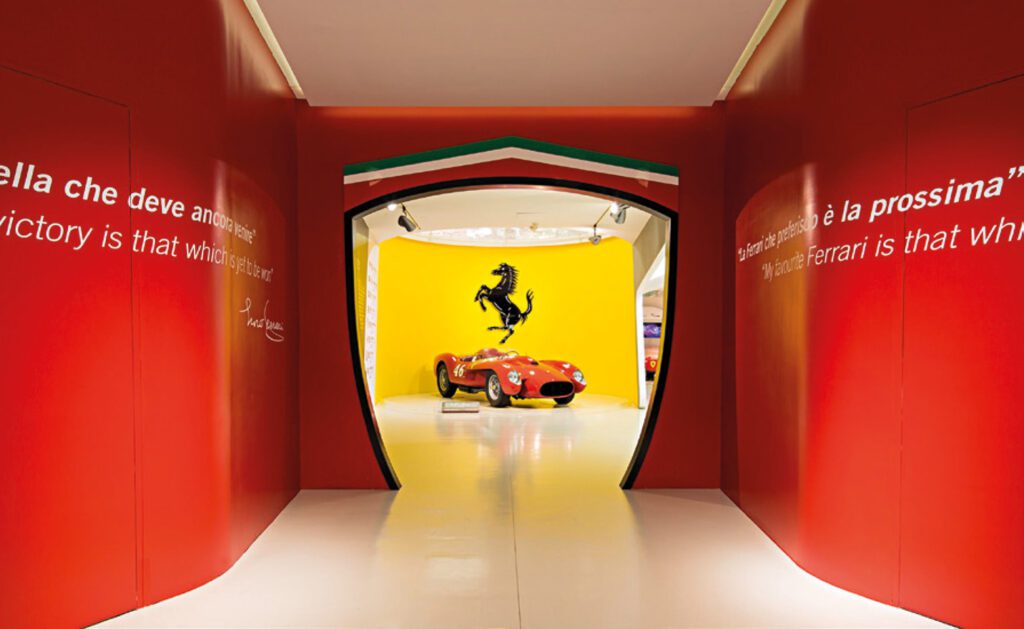
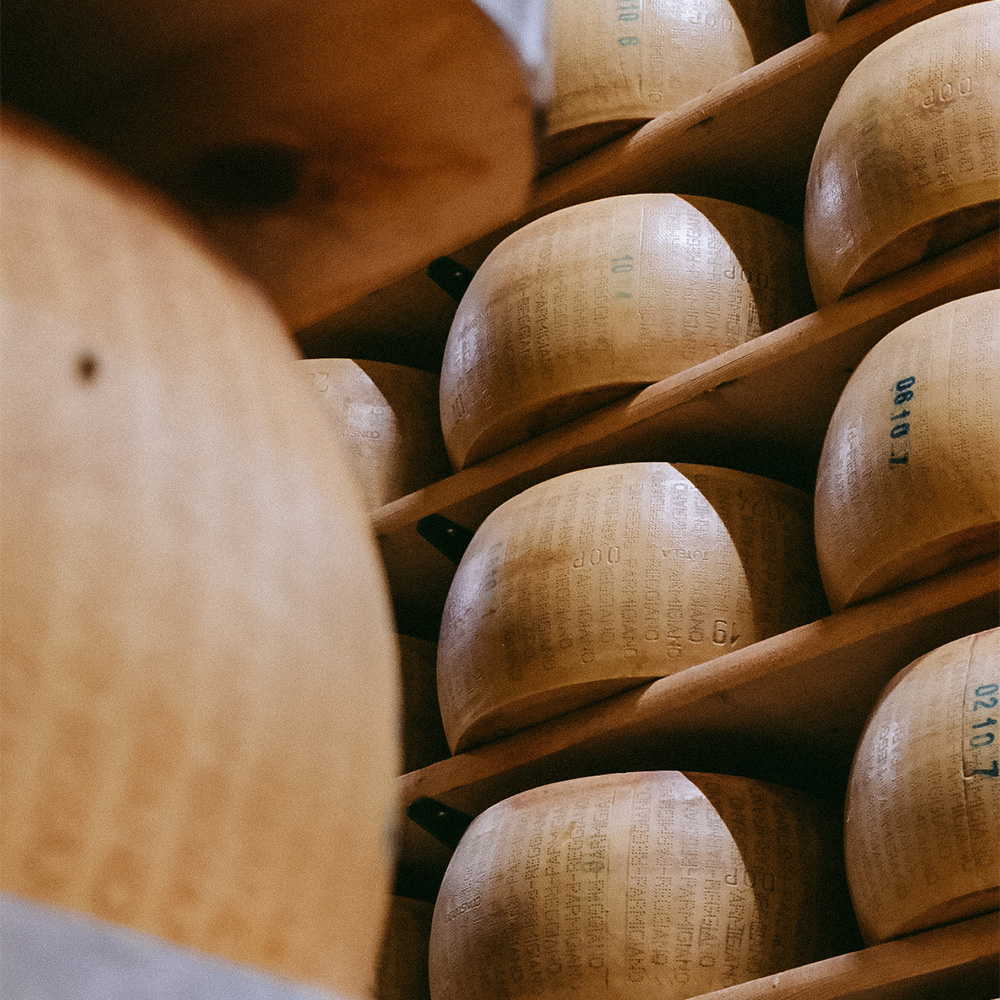
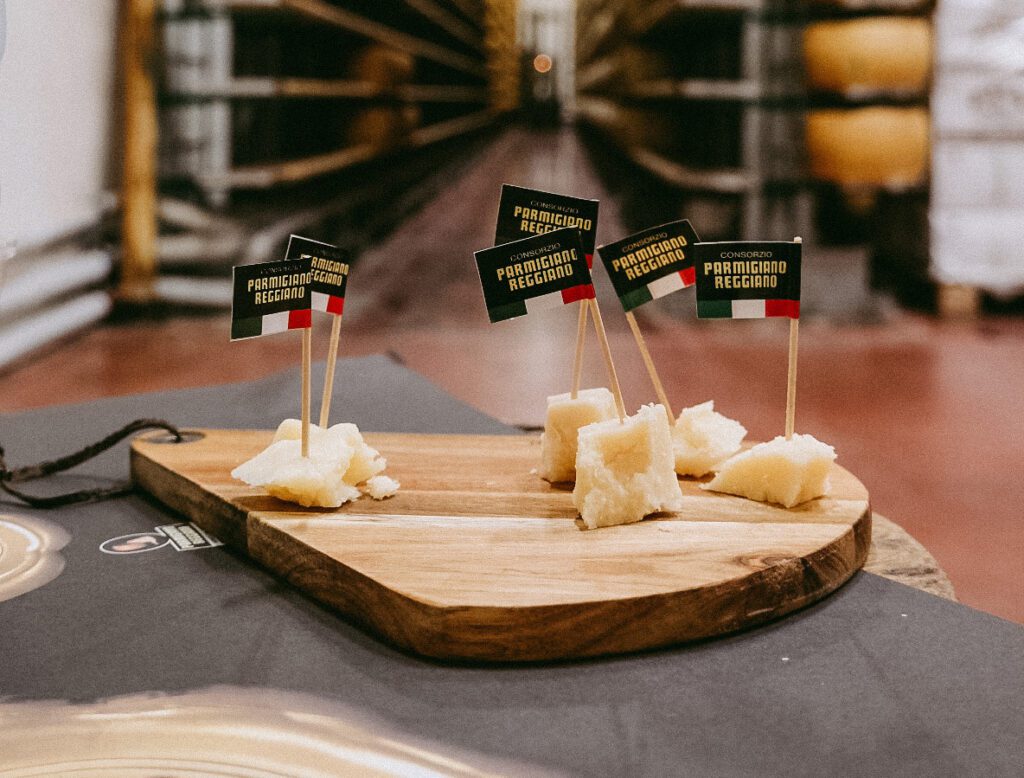
Enjoy the best of the Italian Dolce Vita: savor the Food Valley and cruise through the Motor Valley. From Piacenza and Parma to Ferrara, Modena, and Ravenna, all the way to Reggio Emilia and Bologna, the cities along the ancient Via Emilia are the beating heart of this region.
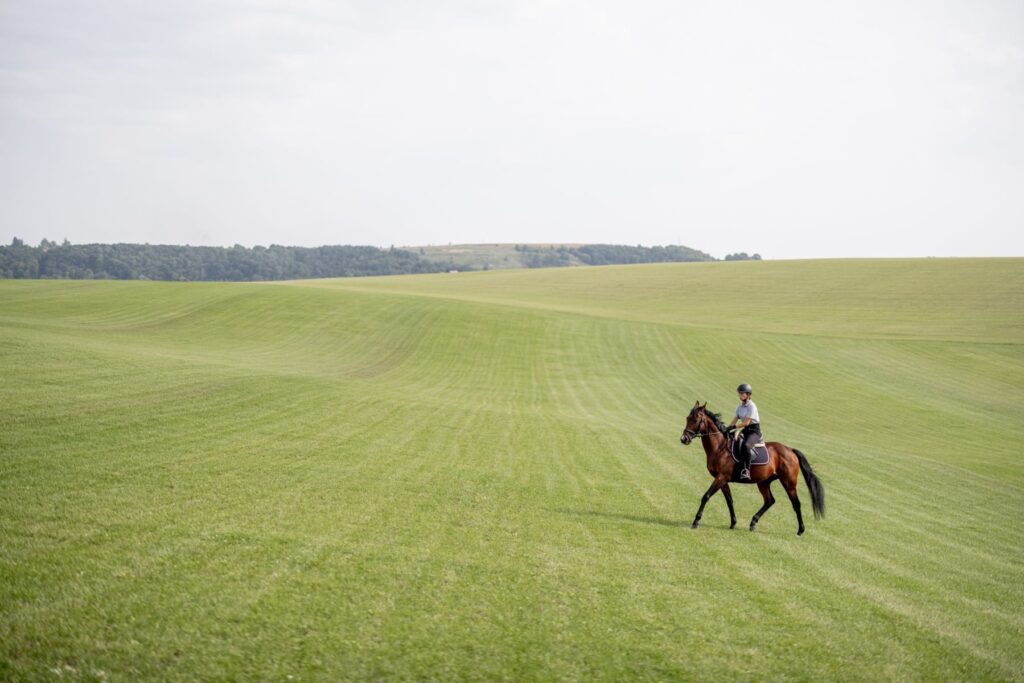
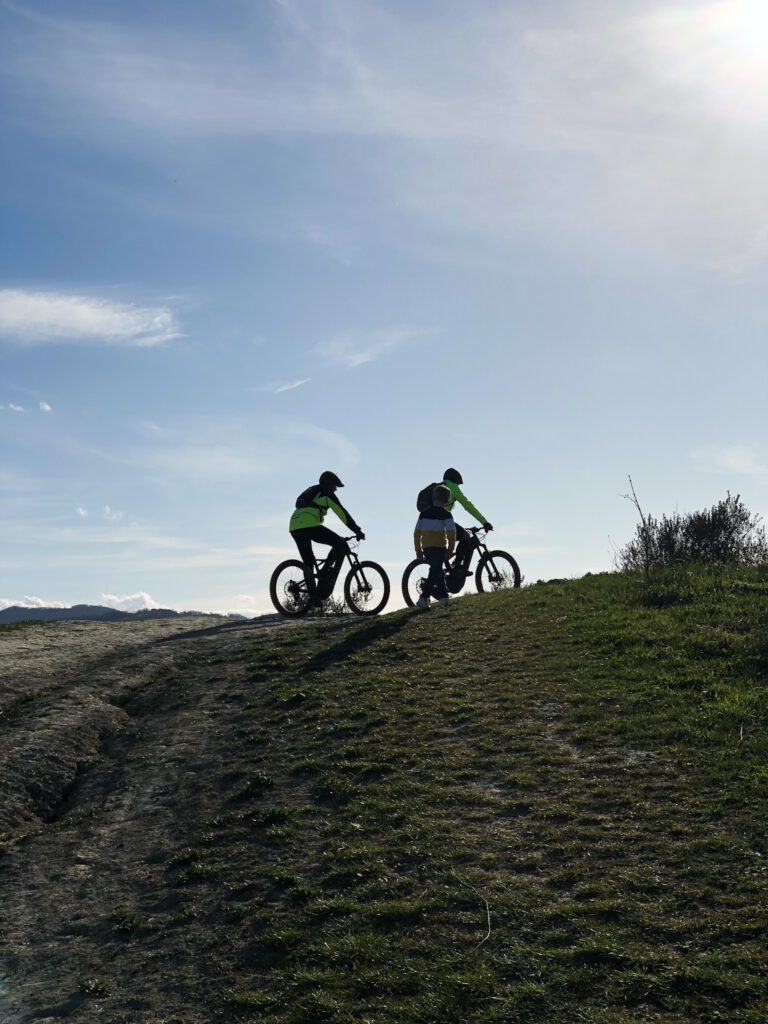
Experience the great outdoors in the bucolic hills of the Tuscan-Emilian Apennines for a vacation filled with sports and nature.